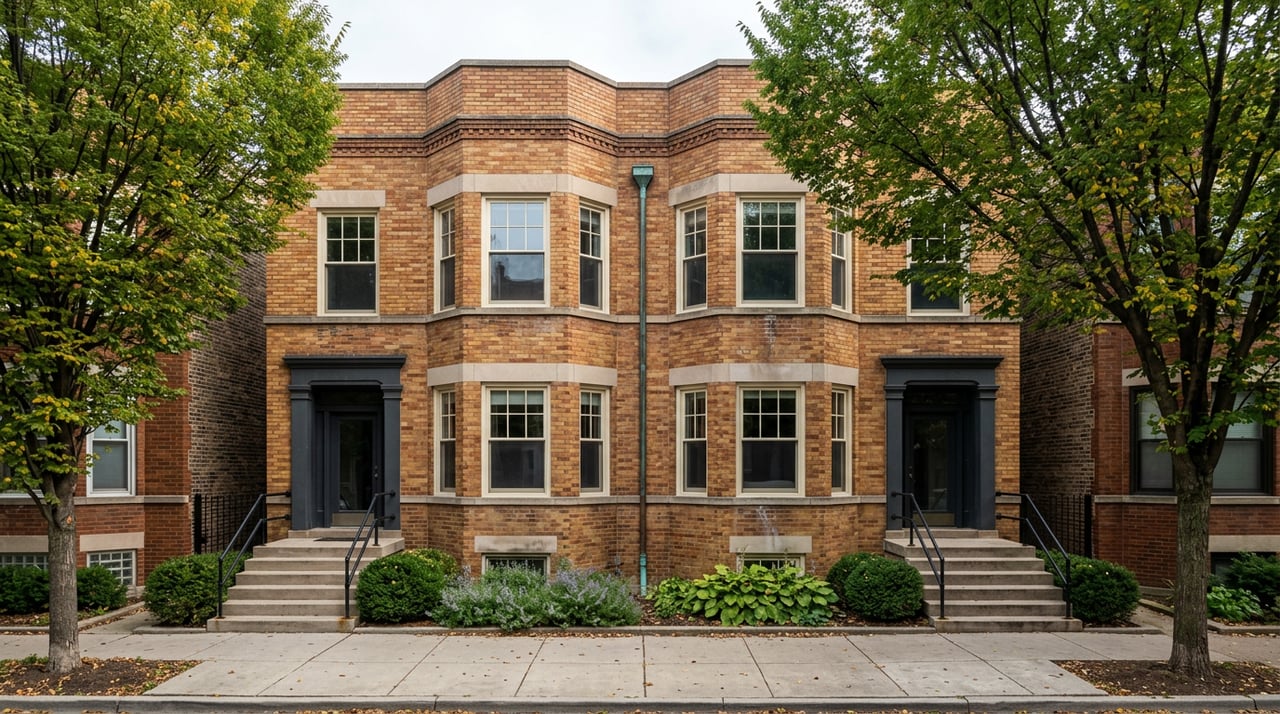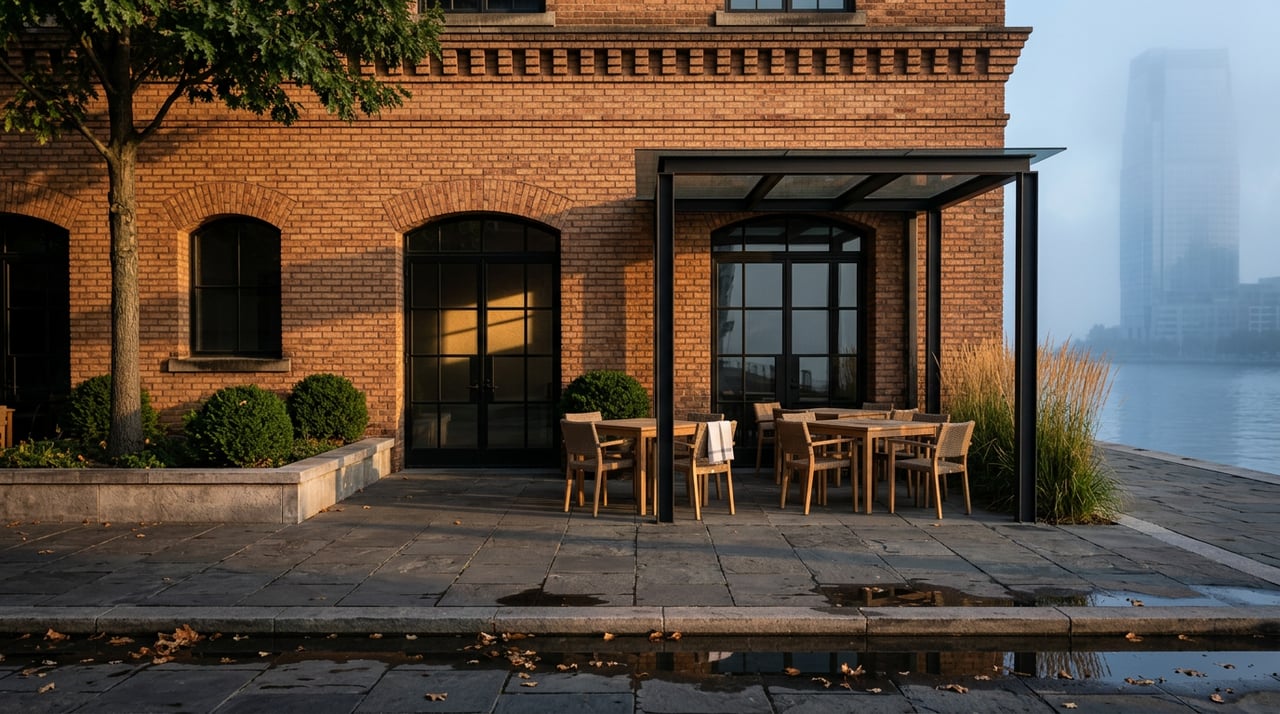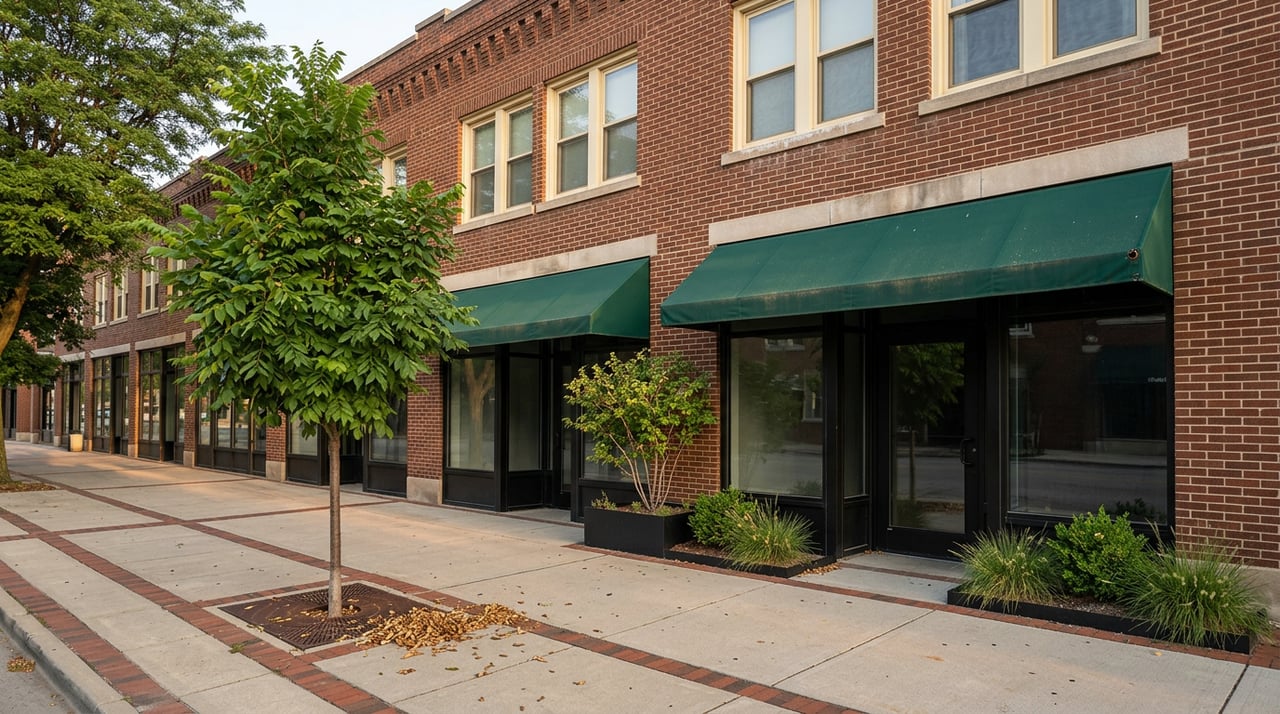
Walk Chicago Avenue on a Friday night this August and you will wait for a table at almost every door you pass. None of those doors are wide. Feld seats twenty. Gilda seats forty-four. Guillotine Bakery has a line that starts before the ovens finish their first batch. None of these places got bigger to meet the demand. That refusal is the actual story of West Town's food scene this year, and it is easy to miss if you are only counting new openings instead of asking why the ones that matter never expanded past their original footprint.
The pattern hiding in plain sight
It would be simple to write this as a list: four new restaurants, one street festival, a neighborhood having a moment. But a list treats each opening as its own event, and that misses what actually connects them. Feld turned down the scale that would have let it order ingredients like a normal restaurant. Gilda turned down a bank loan and built its financing around neighbors instead. Guillotine Bakery has had a line out the door since opening day and has not added a second location or extended its hours to shrink that line. In a neighborhood where commercial rent per square foot rewards volume, these businesses are choosing the opposite math, and it is working better than volume would have.
Twenty seats and a four-hour radius
Feld opened on Chicago Avenue in June 2024 under chef Jake Potashnick, and by August of that first summer the dining room was nearly empty some nights. The turnaround came from tightening the format rather than loosening it: portions went up, seasoning got bolder, and the restaurant kept its one seating a night, six nights a week, twenty seats total. That constraint turned out to be the whole advantage. A restaurant serving two hundred covers a night cannot build a menu around a single farm's forty-five-pound weekly asparagus haul. A twenty-seat room with one seating can, and does, changing up to 40 percent of its menu week to week depending on what a small network of Midwestern farms and ranchers has ready.
That bet paid off publicly this year. Feld picked up its first Michelin star and a Green Star for sustainability in the 2025 Chicago guide, and in June 2026 Potashnick won the James Beard Foundation Award for Best Chef: Great Lakes, the only Chicago chef to take the prize that year. He still calls the operation modest.
"We're such a tiny small fry."
That is not false humility. At twenty seats and a four-hour driving radius for ingredients, Feld physically cannot behave like a restaurant chasing scale. The constraint is the credential.
A bar that skipped the bank
A few doors down, Gilda tells a version of the same story with money instead of asparagus. Chefs Jeremy Leven and Rafael Esparza, working with Anthony Baier and beverage director Ines de Haro, leased a 1,600-square-foot storefront at 1421 W. Chicago Avenue in the former Chi-Latin space back in January, before they had raised a dollar. When Leven was denied a bank loan, the team did not wait for a different lender. They built a community fundraising card called Compañero, offering discounts and perks to anyone who chipped in early, and used it to close the gap between the roughly $70,000 their families scraped together and the $120,000 to $180,000 the Chicago Sun-Times reported it would actually take to open a 44-seat pintxos bar.
That is a financing structure built for a small room. A restaurant planning to scale to multiple locations needs institutional capital and the growth targets that come with it. A forty-four-seat bar funded partly by the people who plan to eat there does not owe anyone a second location. Gilda opened June 1, and the model was never designed to expand past what neighbors could carry.
The line that never got longer
Guillotine Bakery, at 1711 W. Chicago Avenue, imports its butter and flour from France for croissants, pains au chocolat, and kouign-amann. On opening day, people waited more than two hours in the rain to get in. Months later, the line is still there most mornings. Guillotine has not opened a second window, expanded its hours, or scaled up production to shorten the wait. The scarcity is not a bug the bakery is working to fix. It is what a small, ingredient-obsessed operation looks like when demand outpaces its size and the owners decide that is fine.
Small also means specific
The same logic shows up in smaller openings up and down the corridor, each one built around a concept too narrow to work at scale:
- Atsumeru runs a ten-to-twelve course Nordic-Japanese tasting menu at $165 a person, reportedly the only concept of its kind in the city. That price and format only make sense in a small room with a kitchen built for a handful of covers a night, not a menu designed to turn tables.
- Soccer House, at the corner of Grand and Ogden, opened with 6 a.m. hours built specifically around international match times during this summer's World Cup window. That is a schedule built for a moment, not a chain.
- Caña, from members of the Smash Jibarito and Trino teams, is a coffee shop and cocktail lounge in one small footprint, pouring drinks like parcha mojitos and cafe de olla cold brew that only make sense as a hybrid built around two specific backgrounds, not a format meant to be replicated block to block.
None of these are trying to be the next citywide brand. They are trying to be exactly what they are, in exactly the space they have.
Even the block party stayed local
West Town runs its food calendar the same way its restaurants run their kitchens. The West Town Chamber of Commerce's West Town Restaurant Week each March keeps its footprint to the neighborhood's own independent restaurants and bars rather than expanding into a citywide promotion. West Fest Chicago, held July 17 through 19 this year on Chicago Avenue between Wood and Damen, is presented by the same chamber, with music curated by Empty Bottle Presents and the Bass By The Pound DJ stage. Admission is free with a suggested ten-dollar donation, and that money goes to four specific organizations: Erie House, Esperanza Community Services, Nourishing Hope, and Talcott Fine Arts & Museum Academy. The festival could have chased a bigger footprint, a ticketed model, a citywide sponsor list. Instead it stayed sized to the block it closes off and the four nonprofits its neighbors actually know.
That is the same math as Feld's twenty seats and Gilda's Compañero card. West Town's civic life and its restaurant scene are running the identical playbook: figure out exactly how big you need to be to do the thing well, and stop there.
What this means if you already live here
If you have watched Chicago Avenue fill in over the past year and wondered whether the neighborhood is about to tip into the kind of scale that changes a place, the evidence says otherwise. The businesses getting the attention right now are the ones that turned smallness into their actual product. A twenty-seat tasting menu, a forty-four-seat bar funded by its own future regulars, a bakery that would rather keep a line than shorten it. None of them are warming up to expand. They are already exactly the size they mean to be.
That is worth knowing if you live here, because it means the character of this stretch of Chicago Avenue is not a phase before something bigger arrives. It is the strategy, on purpose, and it is working.
If you are watching West Town for reasons beyond dinner reservations, whether that is a first condo, a move from the suburbs, or just keeping an eye on what a neighborhood like this is worth, Jimmy Styx knows this corridor block by block. Reach out for a conversation about what's actually happening here, no pressure, just purpose.